"School can't teach you everything, if you're a
kid like me, or if you have a child in the family .. Follow these quick
tips and you will see how fluent your English will be! :D I'm not saying
that I speak perfect English, excuse the few mistakes I may have made,
but my accent is pretty good for a child in southern Morocco which is
self-instructed in English! Have Fun everyone & Never stop Learning!" Ouissal IDHAJJI, Tiznit.
World Oceans Day is a global day of ocean celebration and collaboration for a better future. It's an opportunity to celebrate our world ocean and our personal connection to the sea.
The United Nations officially recognized June 8th as World Oceans Day in 2008.
The health of the ocean has a direct impact on all life on Earth. Your
everyday decisions play a role in ocean health, so take positive action
to protect the sea
Welcome to the Octonauts Channel The Octonauts are an adventure team who explore the world’s oceans,
rescue the creatures who live there and protect their habitats – above
and below the waves (from the rainforests of the Amazon to the deepest
depths of the Midnight Zone)
I would like to dedicate this article to the students and teachers in La Comunidad Valenciana, all friends with whom I have stayed in touch for several years through Pilar Puerto’s excellent electronic magazine, La Caraba en Bicicleta.
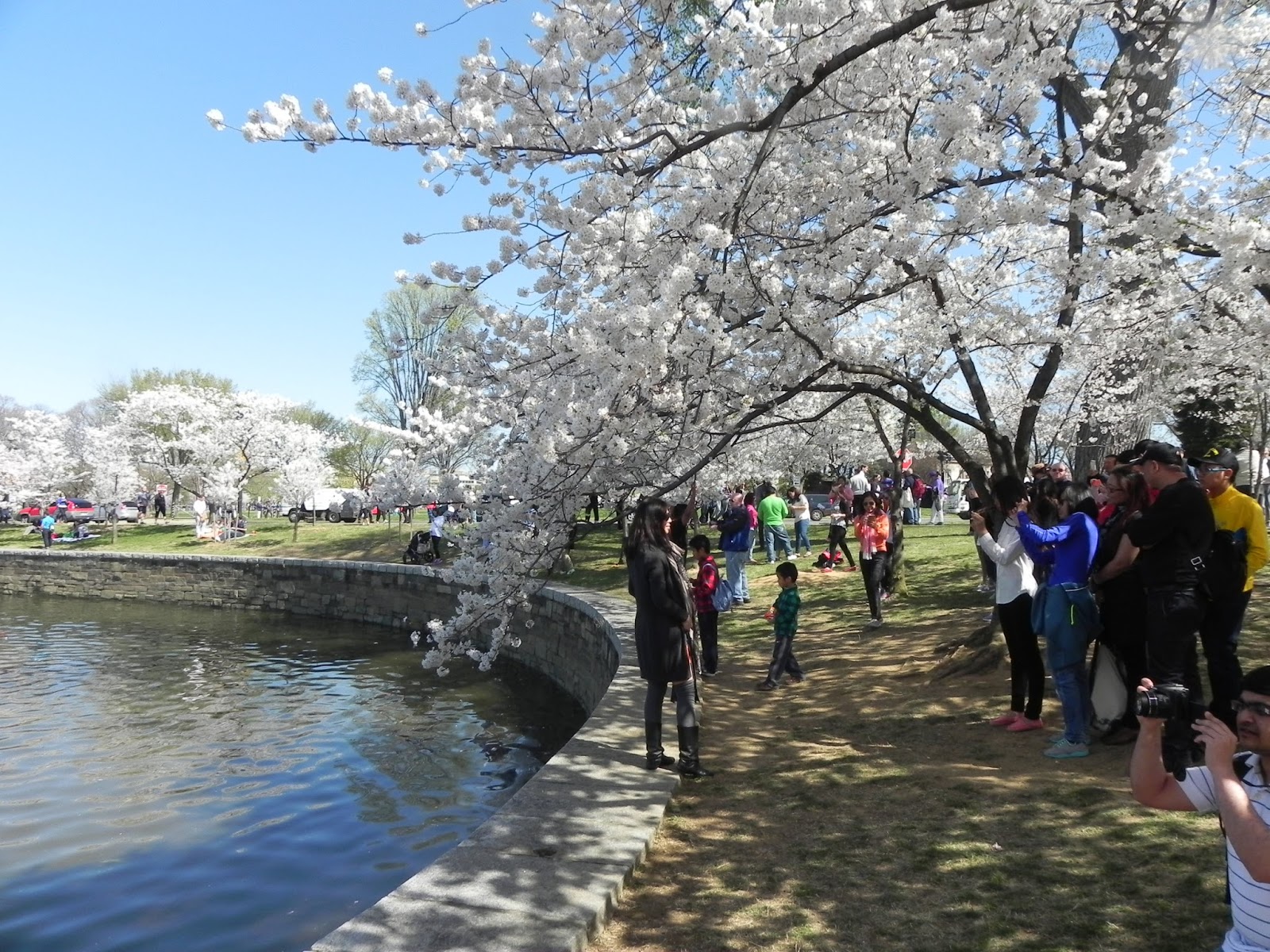
You may remember the articles I sent you about the region of Valley Forge, Pennsylvania, USA, where I used to live and about Celebrating Halloween in the United States. Two years ago I moved to Gainesville, Virginia, located in the greater metropolitan area of Washington, District of Columbia. The residential community of Heritage Hunt, where I live now, is composed primarily of retired persons over 55 years old and is located in the village of Gainesville, Virginia.
Why did I move away from the area of Valley Forge after living there for 53 years, you may ask. Well, for the same reason that approximately 90% of the people in my residential community moved here: to live near members of our family. In my case the family members in Virginia consist of Patrice my oldest daughter, her husband and my two grandchildren, whose home is only seven kilometers away.
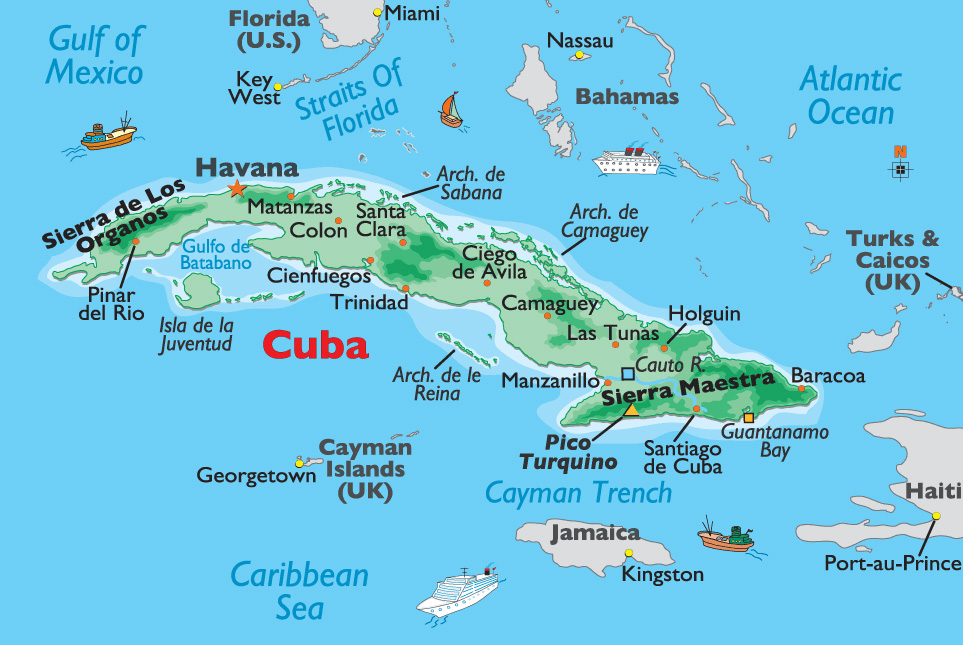
It is a coincidence that this region of the Greater Washington, DC area where I live now is the same one where I lived during my first four years in the USA. In 1947 I arrived in the city of Washington DC after a three-day trip originating in Miranda, a small village near Santiago de Cuba. It would be difficult to find two places in North America that were more different than sugar-cane processing Miranda and the sparkling, monument filled Washington DC; but here I was, sixty- nine years ago, a wide-eyed immigrant teen-age ready to attend college.
In the rest of this brief article I will try to tell you my impressions of the differences between Washington then and how it is now.
First of all, the biggest physical different is the countryside or suburbs surrounding city of Washington, DC. The city center has not changed much, because it has the same majestic monuments like the Capitol, the Washington Monument, the Lincoln Monument, etc.
The suburbs, however, have changed significantly. For instance, in the old times, if I wanted to go out in the countryside when I ventured outside the campus in the Catholic University of America, all I needed to do was to take a brisk walk beyond the area covered by the College and the surrounding monasteries, convents and smaller colleges around Michigan Avenue. Now there are urban areas and residential suburbs blanketing the countryside for a radius of 60 kilometers or more.
For instance, the area in Virginia where I live now had a many farms for breeding horses. That is why the names of the towns, subdivisions and streets are about horses. To illustrate, the town nearest to my town of Gainesville is Haymarket, a name which suggests horse-food. Furthermore, in my community of Heritage Hunt they name most streets after famous racehorses or horserace subjects such as Victory Gallop.
To transport the large number of workers living in this immense metropolitan area has required the construction of many large roads. Major roads such as the legendary Route 66, renowned as the most challenging commuter road in the USA, have high occupancy lanes, where vehicles with more than one passenger are given lane-priority that cuts commuting time for those vehicles considerably.
The most effective approach to this high-traffic challenge was the construction of the METRO rail network, which includes many sections underground. METRO is considered one of the most efficient urban transportation systems in North America. Yet, there is still heavy traffic, particularly during “rush hours” when most commuters are going to work or returning from work. This heavy demand for public transportation occurs in many high-population cities in Spain and all around the world. Like many global challenges in a growing world, it will require the innovative technological efforts of future scientists, urban planners and engineers, some found among good students like you.
Another difference that I found between my time as a student in Washington and today is communication. Back in the nineteen forties, communication between relatively poor students like me and their families in other countries was difficult. Writing letters and sending emergency cablegrams (many of which read: “SEND MONEY”) were still among the principal methods of international çcommunication. There was international telephone, but phone calls between the USA and other countries was expensive and inefficient.
My father and mother were worried sometimes not knowing the condition of their teen-age son for prolonged periods. Our partialsolution to the problem involved a certain degree of high technology. Sometimes we communicated by using amateur radio stations in the USA communicating by radio with Peña, a friend of the family who owned a personal amateur radio station in Miranda, Cuba.
Sometimes I communicated by phone with an amateur radio station that would relay the transmission by amateur radio, but at times I was invited to visit the residence of the amateur radio station owner.
Availability of opportunities to communicate with my parents in this manner were limited, but I considered them as a luxury.
What a difference with the improved and relatively inexpensive telephone communications of today!
For instance, when my granddaughter Katie spent a semester studying in Europe, the family here in Virginia talked or “texted” to her frequently by phone. When my son Mark spent several years working in Germany, we communicated frequently by phone, something that reduced his home-sickness and his parents’ longing to hear from him.
Of course, there was no Internet in the nineteen forties but today it is one of the main methods of communication between students and their parents. What would they do without the e-mail and texting?
When I had a college assignment requiring in-depth research I would take the Michigan Avenue trolley during the week-end and, after a transfer or two, arrive at the Library of Congress downtown, a building which occupied a ground area almost the size of the Capitol Building. I spend hours looking for the information. Today we have access to information equivalent to dozens—perhaps hundreds of Libraries of Congress. All the student has to do is click the right name or phrase in the proper “search engine” such as “Google and—Presto!, he has many sources of information to choose from.
The last difference I want to relate to you between my World as a student in the nineteen forties and now is access to amusement areas. My favorite amusement park in the Washington DC area, as a student, was Glenn Echo, a legendary park similar to the historic Conney Island in Brooklyn, New York. Glen Echo was easily accesible by trolley and provided a wealth of memories and fun.
Today the region surrounding Washington DC has many small local amusement parks, many of which are located near towns and residential areas.
One of the most frequented large parks is Kings Dominium, located near Richmond, Virginia. Much larger than Glen Echo, it has a remarkable collection of roller coasters, among other amusements. The names of some of these roller coasters will give you an idea of the exciting rides they provide: Intimidation, Anacondia (featuring a snake-like trajectory), Flight of Fear, Dominator, Volcano Coaster, Grisly Bear, Avalanche, etc. Kings Dominion, like all the larger amusement parks, has a variety of rides and attractions in addition to roller coasters, all of which make this a very pleasant living area for youngsters.
I have seen the changes that occur in a region such as the greater metropolitan area of Washington, DC during the period of seven decades. This vast change is typical of urban areas such as those occurring around large cities in Spain and the rest of the key countries in the industrialized world. Most of the changes are good, but growth has its challenges and it is up to you, the younger generation to preserve and enhance the world’s environment and peace to ensure its continued enjoyment by you and future generations.
I look forward to seeing some of you, dear friends, during my visit to Spain in June of this year.
With over 1.40 billion views, Little Baby Bum's “Wheels On The Bus | Plus Lots More Nursery Rhymes | 54 Minutes Compilation” is the ninth most viewed video of all time and the most viewed non-music video of all time.
0:04 - Wheels On The Bus - Part 1 (Green Bus) 1:53 - Wheels On The Bus - Part 2 (Red Bus) 3:43 - Wheels On The Bus - Part 3 (Yellow Bus) 5:34 - One, Two Buckle My Shoe
6:37 - ABC Phonics Song 8:04 - Baa Baa Black Sheep
8:56 - Finger Family 9:59 - Ten In The Bed
12:23 - The ABC Song 14:15 - 5 Little Monkeys
16:08 - 3 Little Kittens 18:25 - Twinkle Twinkle Little Star & The Prince 20:27 - London Bridge Is Falling Down 22:13 - Numbers Song 1-20 24:21 - Finger Family (Cat Family) 25:24 - Head Shoulders Knees And Toes 27:25 - 12345 Once I Caught A Fish Alive! 28:43 - Humpty Dumpty 30:12 - Numbers Song 1-10 32:14 - Color Train Song 34:01 - The Itsy Bitsy Spider 35:03 - If You're Happy And You Know It (Clap Your Hands) 36:54 - Pat A Cake 39:06 - Twinkle Twinkle Little Star 39:37 - BINGO 41:34 - Row Row Row Your Boat 42:44 - Ring Around The Rosy 44:12 - Mary Had A Little Lamb 45:53 - 5 Little Ducks 47:57 - Rain Rain Go Away 49:55 - Hickory Dickory Dock 51:12 - This Old Man He Played One
The worldwide community of museums will celebrate International Museum Day on and around 18th May 201.
The theme of 2016 International Museum Day will be Museums and Cultural Landscapes. The objective of International Museum Day is to
raise awareness of the fact that, “Museums are an important means of
cultural exchange, enrichment of cultures and development of mutual
understanding, cooperation and peace among peoples.”
Organised on and around 18th May each year, the events and activities planned to celebrate International Museum Day can last a day, a weekend or a whole week.
Participation in International Museum Day is growing
among museums all over the world. In 2015, more than 35,000 museums
participated in the event in some 145 countries.
The IMD provides the opportunity for museum professionals to meet the
public and alert them as to the challenges that museums face. Indeed,
following the definition of museums provided by ICOM, a museum is a
non-profit, permanent institution in the service of society and its
development, open to the public, which acquires, conserves, researches,
communicates and exhibits the tangible and intangible heritage of
humanity and its environment for the purposes of education, study and
enjoyment. International Museum Day therefore serves as a platform
to raise public awareness on the role museums play in the development of
society today, on an international level.
Il nuovo giorno è come una tela, sta a noi scegliere le emozioni con cui dipingerla... Rosa Di Lernia
La vita è come un arcobaleno, ogni giorno un colore diverso. A volte sei tu che scegli il colore, altre volte, è il colore a scegliere te...
Sabina Nuzzo
Le piccole cose hanno la loro grandezza. Giuseppe Donadei
Tu sei l’unico disegnatore della tua vita, sei il pastello che colora
la tua strada, l’acqua che rinfresca la tua giornata, sei il musicista
della tua colonna sonora, lo scrittore
della tua storia, il pittore del quadro in cui vivi, tu sei tutto quello
che ti circonda, la vita è tua, il resto è solo un contorno.